
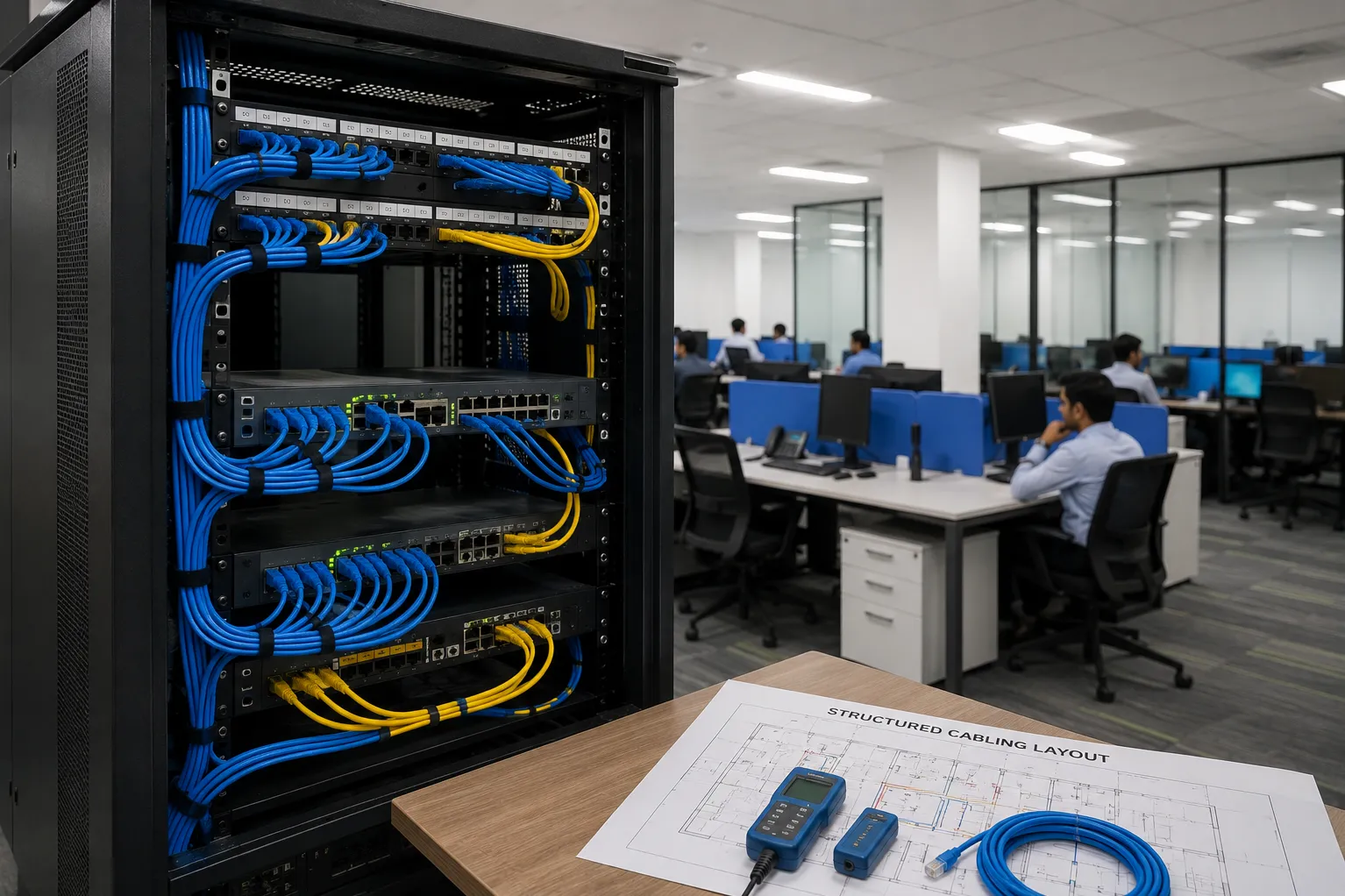
Slow file transfers, unstable internet connections, disconnected devices, and difficult troubleshooting are not always caused by poor hardware. In many offices, factories, schools, hospitals, and commercial buildings, the underlying problem is an unplanned cabling system.
Structured Cabling provides an organised foundation for connecting computers, servers, wireless access points, printers, IP cameras, telephones, biometric devices, and other network equipment. A properly planned system makes the network easier to manage, maintain, and expand as the organisation grows.
How Is Structured Cabling Different From Ordinary Wiring?
Ordinary network wiring is often added whenever a new device is installed. Over time, cables may run through unsuitable routes, remain unidentified, or connect directly between distant devices. This creates confusion when faults occur or equipment needs to be moved.
A structured system follows an organised layout. Cables from different work areas terminate at designated patch panels or network racks. Each connection is labelled, documented, and tested.
The main components may include:
- Data cables
- Faceplates and information outlets
- Patch panels
- Patch cords
- Network racks
- Cable managers
- Switches and related networking equipment
- Fibre connections where required
- Labelling and documentation
This arrangement allows individual connections to be identified without disturbing the rest of the network.
Why Cable Planning Matters Before Installation
The cabling design should account for current users and future expansion. Installing only enough points for today’s employees may lead to additional exposed cables and repeated civil work when the business grows.
Before installation, assess:
- Number of current and planned users
- Locations of workstations and cabins
- Server and network rack placement
- Wi-Fi access point requirements
- IP camera and biometric device locations
- Printer and telephone connections
- Cable route length
- Power and data cable separation
- Possibility of future expansion
For Pune offices operating from leased commercial spaces, the layout should also consider furniture placement, false ceilings, floor ducts, and building restrictions.
Copper or Fibre Cabling?
Copper cabling is commonly used for workstation connections and local devices. The appropriate category depends on the required speed, distance, connected equipment, and future performance expectations.
Fibre is often considered for longer distances, high-bandwidth links, connections between floors, and communication between separate buildings. It is also less affected by electrical interference.
A site assessment helps determine where copper is sufficient and where fibre may provide better performance.
Common Cabling Problems to Avoid
Poor installation can lead to intermittent connectivity and difficult maintenance. Common issues include:
- Cables routed too close to electrical wiring
- Excessively tight bends
- Unlabelled connections
- Overloaded cable trays
- Loose terminations
- Poor-quality connectors
- Untested data points
- Inadequate rack ventilation
- No allowance for additional users
Testing each point after installation helps verify continuity and basic performance before the network is handed over.
Why Documentation Is Essential
A completed cabling project should include clear labels and records showing where each point terminates. This reduces the time required to trace faults, move users, or replace switches.
For businesses with multiple floors or departments, consistent naming becomes even more important. Documentation should be updated whenever the layout changes.
LK COMPUTER & ELECTRONICS plans and implements business cabling infrastructure across Pune for offices, institutes, healthcare facilities, factories, and commercial premises. Before adding more temporary network wires, arrange a site review to map existing connections, identify weak points, and develop an organised layout that supports future expansion.
Keywords